Scaling AI: Why Fabric Structures Are the Smart Choice for Data Infrastructure
As the AI boom accelerates, one challenge continues to surface across startups, cloud providers, and research labs alike: infrastructure. The demand for GPU clusters, edge compute nodes, and scalable datacenter capacity is skyrocketing—and traditional construction simply can’t keep up.
Whether you’re training massive language models, serving inference at scale, or deploying edge environments in the field, your physical infrastructure can become a bottleneck—or a strategic advantage. Unfortunately, most companies don’t have 12–24 months to permit, build, and outfit new facilities. The race is on, and speed is everything.
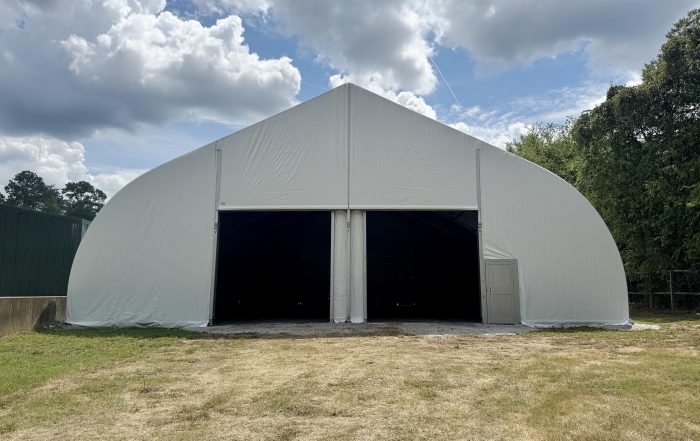
That’s why more AI firms, datacenter operators, and research institutions are turning to tension fabric buildings—a smarter, faster, and more flexible way to meet the physical demands of modern compute.
Here are three key reasons why our structures are uniquely suited to support AI and datacenter deployments:
1.Clear-Span Interior
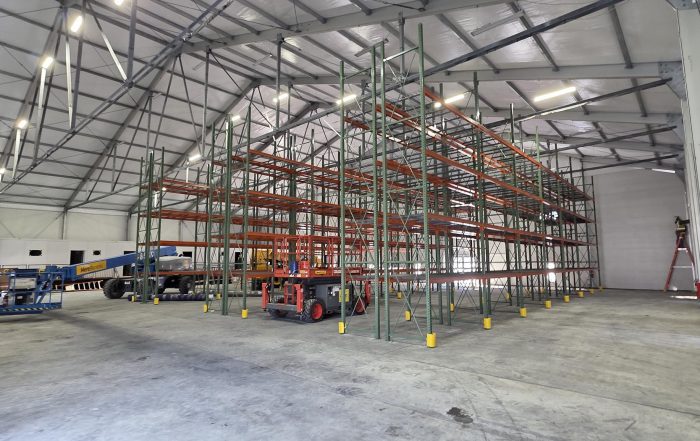
AI infrastructure requires more than just square footage—it demands precision in layout, airflow, and access. Our buildings are completely free of internal columns, allowing full customization of server rack layouts, containment zones, and cable routing. Whether you’re optimizing for hot/cold aisle efficiency or planning phased equipment rollouts, the open span gives you total flexibility.
2.Engineer-Stamped & Code-Compliant
Unlike temporary or tent-style structures, ISS buildings can be fully engineered and stamped to meet IBC and local code requirements. This makes them suitable for mission-critical applications, insured deployments, and compliance-heavy environments—especially where sensitive hardware and large-scale investment are on the line.
3.Faster Installation Time
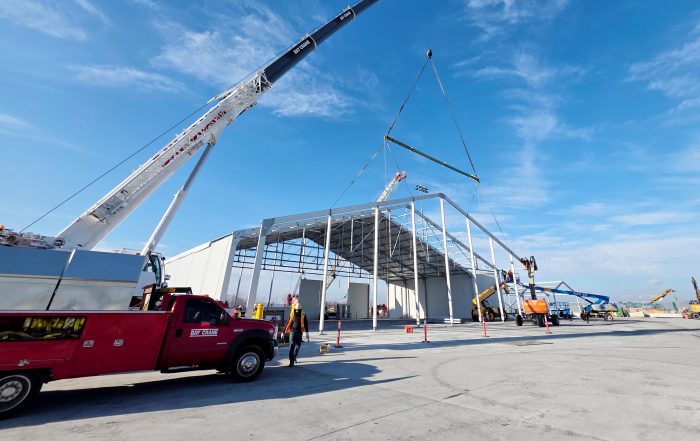
Speed matters. Our structures are in stock, and customizations can be manufactured, delivered, and installed in a fraction of the time it takes to build traditional facilities. That means you can deploy infrastructure quickly—whether you’re spinning up capacity for model training, expanding edge compute, or launching a new AI product.
Why Speed is Everything
Infrastructure timelines are out of sync with the pace of AI development. Getting a new facility approved and built using traditional methods can take well over a year—and that’s if everything goes right.
Meanwhile, your GPU clusters are already stacked, your workloads are scaling, and your customers are waiting. Fabric structures solve this mismatch by offering:
- Deployment in weeks instead of months
- Faster permitting and sitework
- Modular growth as compute needs increase
Instead of overbuilding or overcommitting, you get exactly what you need, when you need it – and retain the ability to pivot quickly.
Agile Structures for Agile Teams
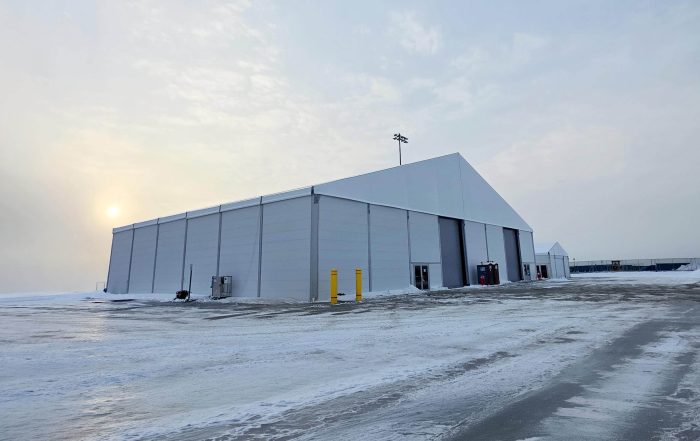
What makes fabric buildings such a strong fit for the AI and datacenter space is their adaptability. These aren’t backyard tents—they’re engineered environments capable of supporting mission-critical operations, built with aluminum frames, durable architectural membranes, and climate-control integration.
Use cases range widely:
- Housing GPU clusters in secure, temperature-controlled environments
- Creating modular edge compute hubs near end users
- Building out surge capacity during model training or product launch cycles
- Deploying mobile testing labs or remote R&D units
Instead of committing to fixed infrastructure that may not serve you next quarter, you gain the ability to scale, reconfigure, or relocate as needed.
Built for Mission-Critical Workloads
AI and compute infrastructure can’t afford downtime. Whether you’re running GPU clusters for deep learning or managing containerized workloads at the edge, your environment has to be stable, reliable, and resilient. That’s why ISS fabric buildings are engineered specifically for mission-critical use.
These structures are built with durability in mind. Frames are designed to meet demanding snow, wind, and seismic codes. Climate control options, including insulation and integrated HVAC systems, help ensure that sensitive electronics can operate efficiently year-round. Inside, the clear-span layouts create wide-open, uninterrupted spaces—perfect for racking servers, organizing power systems, and integrating custom layouts. Security systems, lighting, and access controls can all be seamlessly installed to support 24/7 operations. Whether you’re deploying in a major metropolitan area or a remote field location, these structures are designed to perform under pressure.
Cutting Through Construction Bottlenecks
One of the most significant challenges in expanding physical infrastructure is the permitting process. Traditional buildings often trigger extensive zoning reviews, environmental studies, and multi-agency inspections—each of which can delay a project for months. And in the fast-moving world of AI, delays like that aren’t just inconvenient—they’re expensive.
Fabric structures offer a way around that logjam. Because they’re modular, relocatable, and often classified differently than permanent buildings, they typically qualify for expedited review processes or alternative code pathways. Some can even be installed under temporary permits, allowing companies to move forward while pursuing full entitlements in parallel. That kind of flexibility can mean the difference between hitting a launch window—or missing it entirely.
Built to Match the Culture of AI
Agility isn’t just a buzzword in AI—it’s a core operating principle. Teams iterate fast, ship fast, and pivot based on feedback. It doesn’t make sense to anchor those workflows to fixed, inflexible buildings that take a year to build and even longer to modify.
Fabric structures align with the iterative, agile mindset of AI development. They can be deployed quickly, scaled incrementally, and adapted as the needs of the business evolve. If compute loads spike, a new wing can be added. If a project shifts locations, the structure can be disassembled, relocated, and reassembled. And if priorities change entirely, teams aren’t stuck with sunk costs from a static build. It’s physical infrastructure designed to evolve—just like the AI systems it supports.
Meeting the Needs of a Growing Industry
The demand for scalable AI infrastructure isn’t limited to one sector. Startups building new models need secure, climate-controlled space to train and deploy. GPU cloud providers are under pressure to increase capacity and reduce latency. Research institutions require modular environments for testing and prototyping. And government agencies often need rapidly deployable compute facilities that can support secure operations in the field.
ISS serves all of these needs with structures that are purpose-built for high-performance environments. With decades of experience across logistics, aviation, industrial, and defense applications, we bring the engineering expertise to deliver buildings that don’t just meet code—they meet the pace of progress.
Start Building Smarter
AI is moving fast—and your infrastructure needs to keep up. Whether you’re launching a new product, onboarding a wave of enterprise clients, or preparing for future scale, the smartest move might not be building bigger—it’s building better.
Fabric structures from ISS give you the power to act now, expand later, and adapt as the landscape shifts. You don’t have to choose between speed, strength, and flexibility. You can have all three.
Let’s talk about how to bring your AI infrastructure plans to life—without waiting 18 months to break ground.